


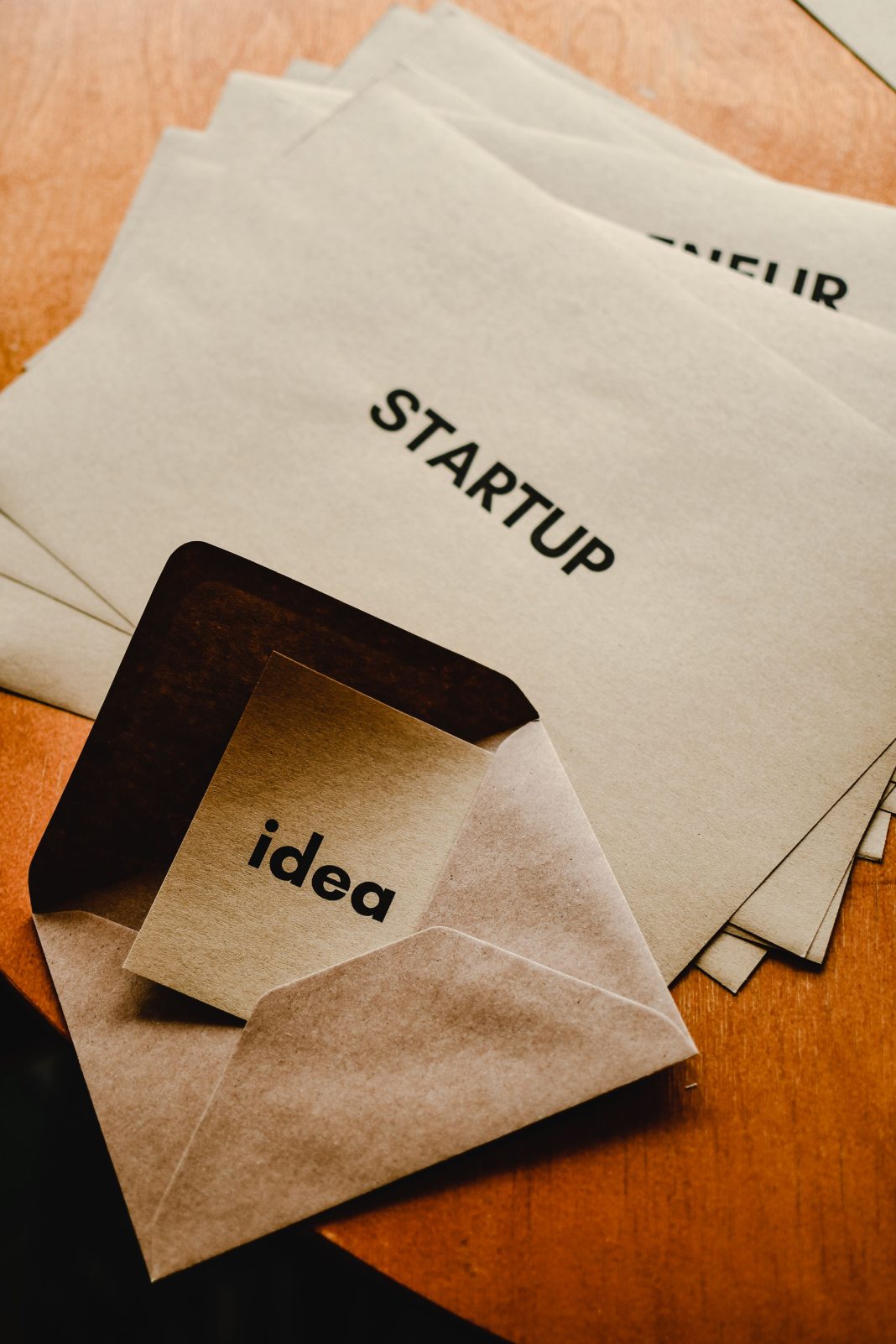

All unicorns—all the billion-dollar companies you admire today—were once a scrawled idea on a napkin, a frustration you shared with others, or a “there’s got to be a better way” moment. That spark and a thriving, scaled company aren’t separated by luck. There are deliberate steps to be taken, each with its own risks, milestones, and shifts in mindset.
This roadmap deconstructs the entire startup growth journey—from the initial spark of an idea to global expansion—so founders can know not just what, but when and why.
1. Ideation: Finding a Problem Worth Solving
A problem is the starting point of startup growth, not a business plan. The best startup ideas don’t come from chasing trends—they come from real pain points.
The core steps of the idea generation phase:
- Find problems you have personally encountered or often observed
- Talk to potential users Before writing a single line of code
- Why is this not already a thing? The answer often uncovers the opportunity or the trap
- Market size, timing, your special insight or benefit
A great idea is where a real problem meets a scalable answer and a founder uniquely positioned to solve it.
2. Validation: Testing Before You Build
The #1 reason startups fail is not bad execution. It’s building something no one wants. That’s how you protect yourself from that mistake: validation.
Practical validation techniques:
- Perform customer interviews and surveys to validate the urgency of the problem
- Create a landing page and measure sign-up or waitlist interest
- Introduce a minimum viable product (MVP) to a limited test market
- Measure real action (clicks, pre-orders, referrals), not opinion
Validation is not a one-time checkbox but an ongoing habit that should continue into your growth stage.
3. Product Development: Building What Matters
Once validated, the next step is to build a product that solves the core problem really well — not one that has every feature under the sun crammed into it.
Best practices:
- Launch lean and iterate based on real user feedback
- Focus on the “core “loop”—the single experience that delivers your product’s main value
- Good UX pays off early; it compounds to retention later
- Create analytics from day one to help you make decisions based on data, not guesswork
The true basis of sustainable startup growth is great product-market fit. Once this is nailed, everything downstream (funding, marketing, scaling) is better.
4. Funding: Fueling the Journey
Not every startup needs venture capital, but most need some form of capital to grow faster than organic revenue can provide.
Sources of funding usual:
- Bootstrapping – keep control, grow slower, prove the model with your own resources
- Angel investors – early-stage capital, plus mentoring and networks
- Venture capital – larger checks for equity, appropriate for high-growth, scalable models
- Grants and government schemes — increasingly available to startups in sectors like tech, deep tech, and sustainability
- Revenue-based financing Non-dilutive capital linked to future revenue
Select funding that suits your growth goals — raising too early or too much can dilute focus as much as it dilutes equity.
5. Scaling: Turning Traction into Growth
That’s the rub for so many startups. What works at 100 customers often breaks down at 10,000. This is what real Startup Growth is about.
What scaling actually requires:
- Systems and processes that aren’t reliant on the founder doing things by hand
- Infrastructure that can take the load without breaking . Reliable
- A repeatable, predictable engine for winning customers
- Religiously tracked rigid metrics (CAC, LTV, churn, burn rate)
Growth should be driven by evidence of product-market fit, not pressure or vanity metrics.
6. Hiring: Building the Team Behind the Growth
“The limiting factor for a startup is most of the time not the idea, but the quality of the team. As you grow, hiring becomes a growth lever in itself.
Principles of count hiring:
- Initially, hire for ownership and adaptability vs. pure credentials
- Build a strong culture on the founding team before scaling headcount
- Bring in specialized leadership (sales, engineering, marketing) as functions mature
- Invest in onboarding—a mis-hire is much more expensive at scale than at seed stage
Know that your first 20 hires define the culture for the next 200.
7. Branding: Creating an Identity People Trust
Branding is beyond a logo – it’s the perception, trust, and emotional bond your startup creates with the market.
Building a growth-enabling brand:
- Create a clear brand voice, mission and visual identity early on
- Consistency in your website, product and communications
- Tell a story with your brand—people remember stories, not features
- Build early trust with authentic storytelling and founder-led content
Brand is a huge startup growth advantage that is underrated. It lowers your customer acquisition cost over time because people come to you instead of you chasing people all the time.
8. Marketing: Driving Sustainable Demand
Marketing for startups is about finding a repeatable and cost-effective way to get to the right audience – and needs to evolve as you scale.
Phases of marketing strategies:
- Early stage: building community, content marketing, outreach to founders, organic SEO
- Growth stage: paid acquisition, partnerships, referral programs, influencer collaborations.
- Stage scale: marketing + PR, campaigns on different channels, localization for international
Many early-stage founders use startup directories and discovery platforms as a resource. For example, you can list your company on a platform like ListMyStartup to increase visibility, build backlinks for SEO, and connect with investors and early customers who are actively browsing for new startups to discover. Get into the right directories early on. It’s a cheap marketing win and often one that’s overlooked.
9. Global Expansion: Becoming a Unicorn
- Validate demand in new markets before committing resources
- Localize product, pricing, and messaging — not just translation, but cultural fit
- Build regional partnerships and hire local market leaders
- Ensure your infrastructure, compliance, and support can handle multi-region operations
Companies that reach unicorn status ($1B+ valuation) typically do so by combining strong unit economics at home with disciplined, well-timed expansion abroad.
Final Thoughts
Startup growth is not a linear path—it’s a cycle of building, testing, learning, and rebuilding at every stage from idea to IPO or acquisition. The winning founders are not necessarily the smartest people in the room. They are the ones who ruthlessly validate, build disciplined systems, hire well, and stay relentlessly close to their customers.
Whether you are validating your first idea or gearing up for international expansion, the fundamentals are the same: Solve a real problem; build trust and grow with intention, not just speed.